
Many-to-Many: From Abstract Ideas to a Living System

Welcome back to our series on building the Many-to-Many System. In our first two posts, we explored the project’s origins, the challenge of structuring our complex knowledge, and the human pace required to do it well. We left off discussing the need to create a digital “guide” to help people navigate the deep and interconnected learnings from our work.
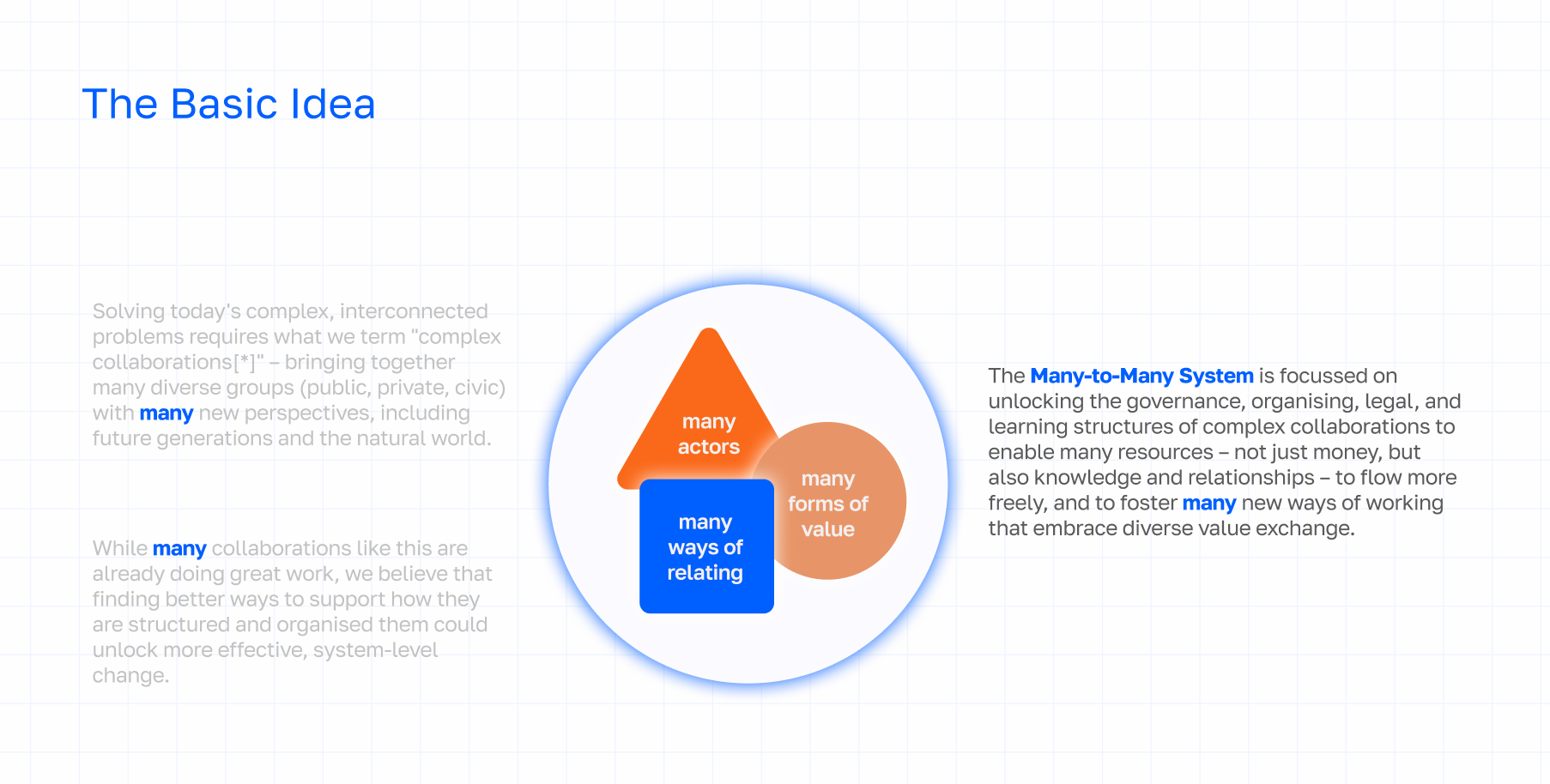
Over the past three months, that abstract idea has become a tangible reality. We have been working in parallel on two major outputs: a linear, narrative-driven Field Guide and a modular, interactive website. These two pieces have been in constant conversation, shaping each other as they evolve. In this post, we, Arianna, Gurden, and Michelle, share our reflections on bringing this part of the system to life, the power of a good design process, and what it feels like to see emergence in action.
Arianna: Maybe I can start. The last three months have been a back-and-forth conversation between our two major outputs: the Field Guide and the website. We were working on them in parallel, so every new page or piece of content for the Field Guide would influence the website, and the website would influence the Field Guide. A really interesting part was categorising all the tools. For you too, Michelle, I imagine writing in the Field Guide and then seeing the first draft of the website that Gurden built really helped clarify what should remain in a linear format and what could become an interactive element.
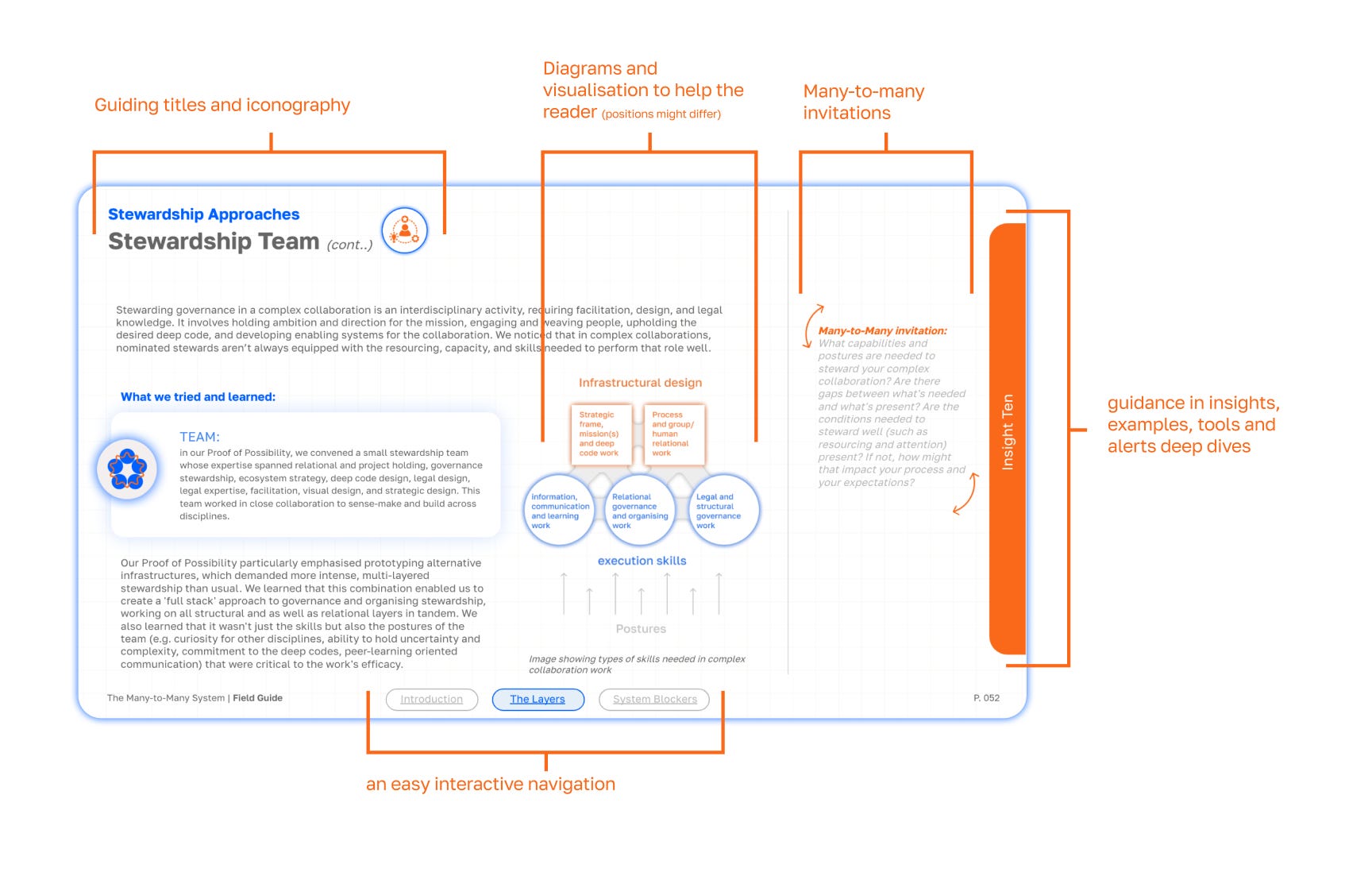
This double narration is key. The Field Guide is linear, so people can follow page by page, and we’ve put a lot of effort into diagrams that synthesise and distinguish each section clearly. On the website, we’re trying to simplify the experience with shortcuts and modular recalls so that everything is interconnected. That has been our core challenge and focus these last months.
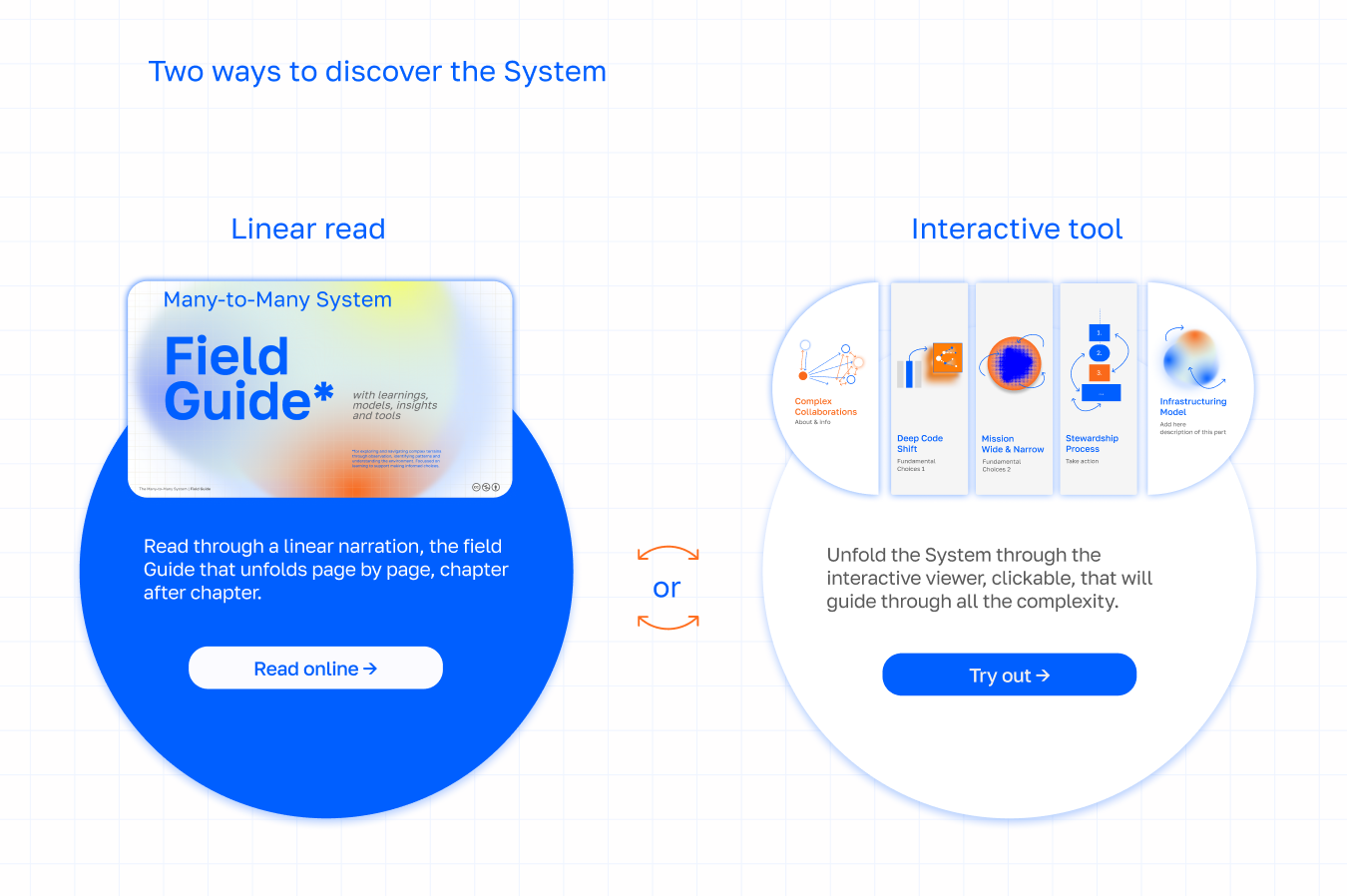
Gurden: Yeah, listening to you, Arianna, it’s really cool to watch this flow of content between the Field Guide and the website. We made these structural decisions months ago, sitting in a park during our workshop, and it’s a great feeling to see them validated now. We were a bit unsure at the time because we’re dealing with so much complexity: many, many, many things, as the name suggests! But we made a conscious decision to have both a linear and an interactive flow, and the process has proven that was the right call.
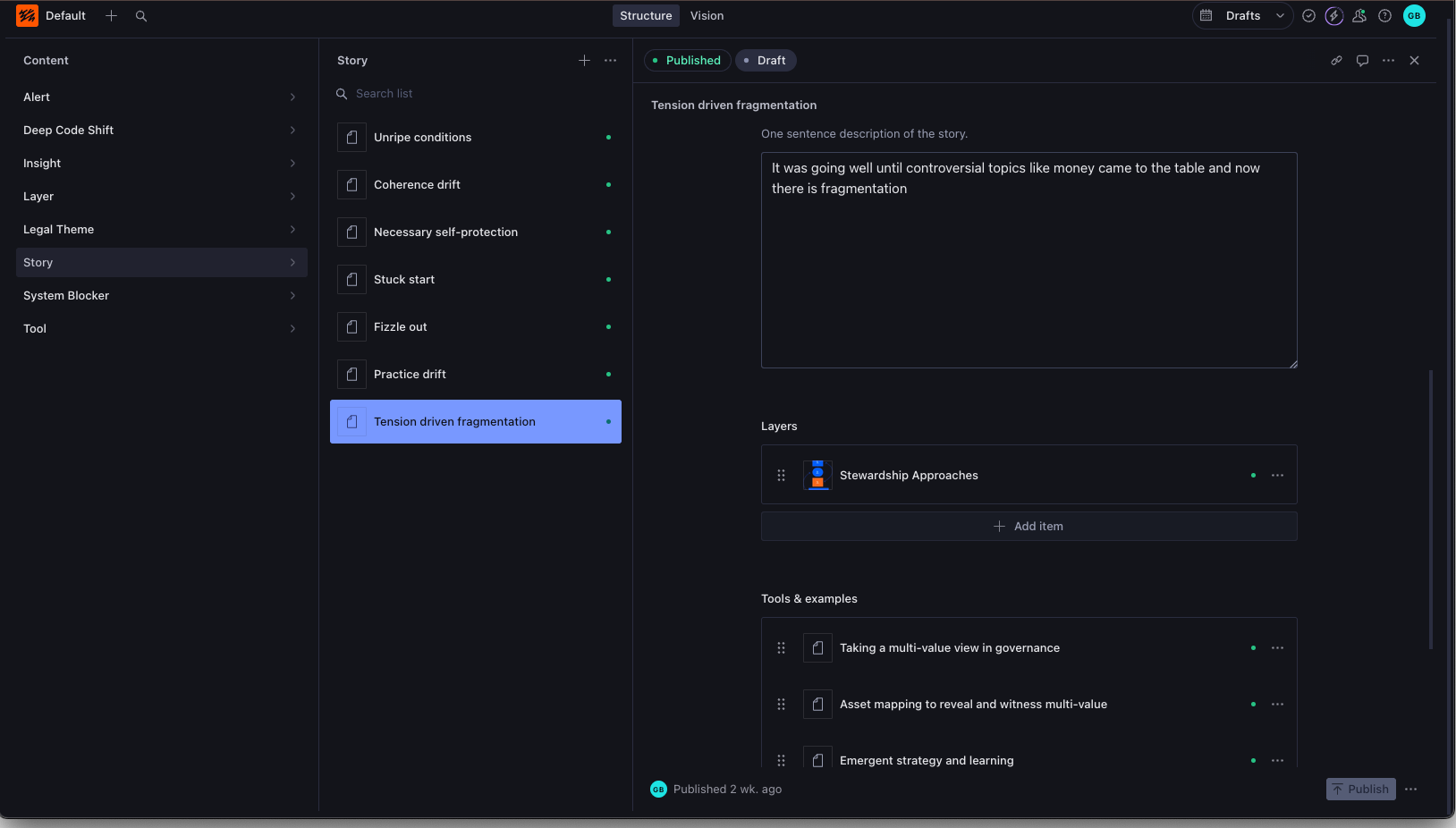
As the Field Guide grew, the website structure grew with it. To make sure the website is structurally sound, I set up a skeleton database in Notion for the main content. To be honest, my expectations were a bit low when I asked Michelle and Annette to fill it, but big shoutout to Annette, her mind works just so quickly. She immediately got the object-oriented structure and filled it up, making the connections brilliantly. That gave me a distilled version of the content to populate our website via the Content Management System.
I’m glad we didn’t try to perfect everything at once. We moved fast, built a rough first version, and brought it to life, which is now live internally. We’ve already done a few quick user tests. If we had just stayed in Figma, we’d still be there six months from now.
Michelle: I have so little to add because you’ve both covered most of it! My main addition is to highlight how everything has informed everything else. You’ve talked about the Field Guide and website, but they, in turn, provided enough structure for the database so Annette could go in and finish it. That process gave all of us a deeper understanding of our tools, examples, case studies and other assets we needed to create.
It’s a good example of real emergence. A lot of people talk about emergence when they’re really just describing chaos without enough boundaries. But here, we had pieces that genuinely formed the next piece, that formed the next piece. What was supposed to come out and what would be useful for other people was illuminated by going through this process. It gave birth to key assets we hadn’t yet imagined, like Angela’s “Experimenter’s Logbook”, which will be available soon on the website. I’m not sure that would have been conceived in the same way without this interplay. It’s a testament to what a good design process does, and even though we didn’t invent the design process, it was nice to be part of one that was so fruitful.
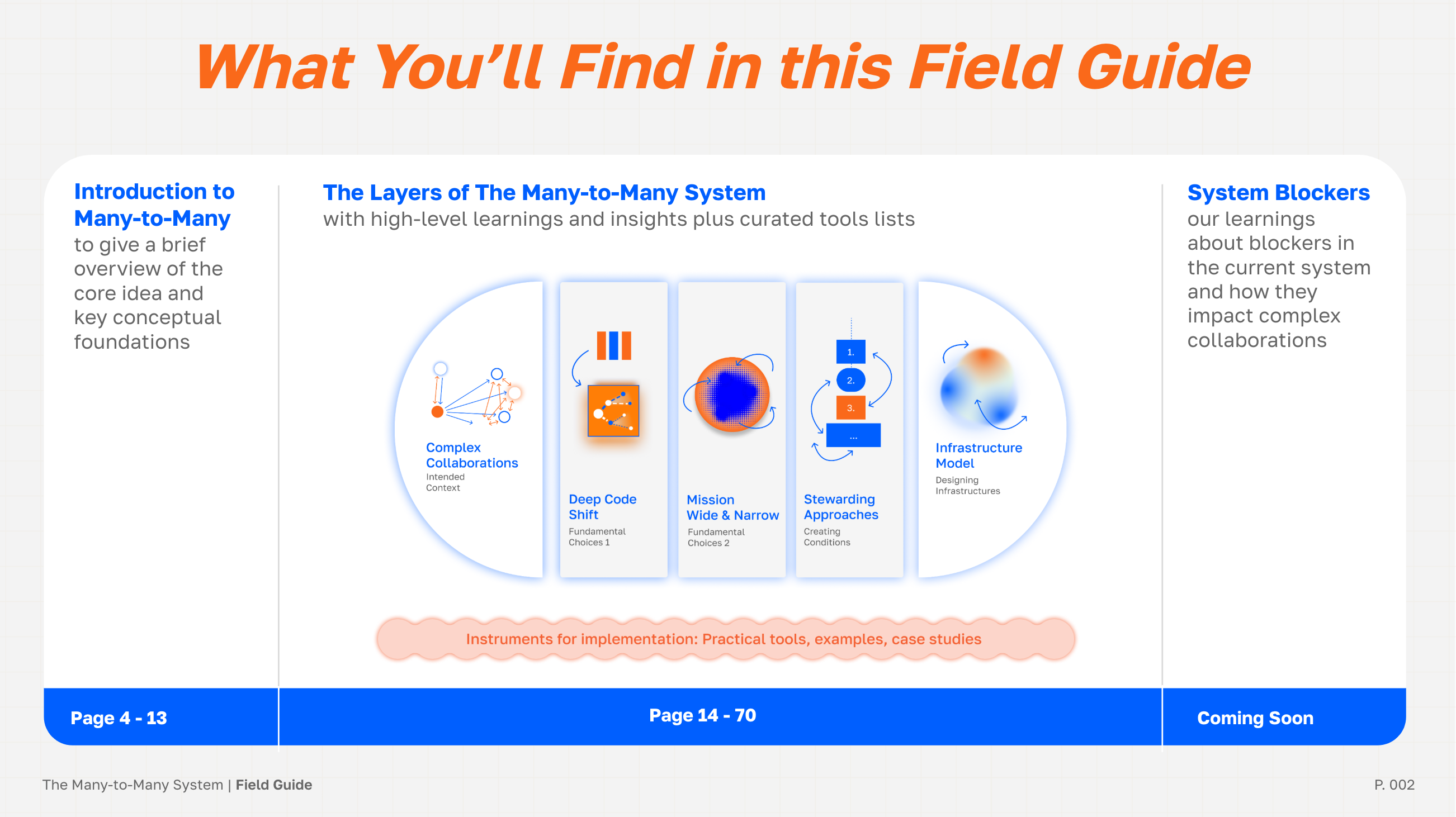
Gurden: I agree. The process exists, but I’ve seen so many teams not follow it well. And credit to you, Arianna, the interconnected diagrams you created are now coming to life. When you navigate the website, you see a problem and the related tools linked directly to it. These interlinkages are what make it a living system, not just a static page.
Of course, that’s also our next challenge: making sure the user experience works, that people don’t get lost. A website is a living organism, and new ideas will constantly come in. The hard part now is making conscious decisions about what we need to fix before launch versus what can wait for the next version.
Arianna: That brings me to another point: how we are all holding many hats. We aren’t a typical product team where each person has one defined role. The core team is tiny, and each of us holds three or four different roles. This has positives, we can communicate rapidly, and as designers and coders, we are deeply embedded in the content, thanks to the time Michelle and Annette took to teach us. But on the other side, by holding many roles, we have to compromise. We can’t excel at everything. So, for this first version, we might focus less on perfecting accessibility, for example, because our goal is to launch an alpha or beta version. When we have more time to focus, we can scale it and do it better.
Michelle: That’s a super good reflection on the human side of the process. So, to wrap up, we’ve now asked a set of close collaborators to give us feedback over the next month. Our hope is that the website, the core tools, and the Field Guide will be ready to share more widely in late September or mid-October. Then we’ll put it out into the world, get a wider set of feedback, and see what people think.
Our next step is to incorporate feedback from our close network before sharing it with all of you.
Thanks for following our journey. You can find our previous posts here and here and stay updated by joining the Beyond the Rules newsletter here.
And a big thanks, as always, to the other members of our team — Annette and Angela — who are key stewards of this work.
